

Manufacturing glossary of terms
Unlock the secrets of manufacturing with our glossary of terms developed over 40 years by George Donaldson, Shingo Prize recipient! Take a deep dive into industry jargon. Don't wait! Master your industry knowledge NOW!
The story of how this glossary was created and has evolved, in the words of author George Donaldson.
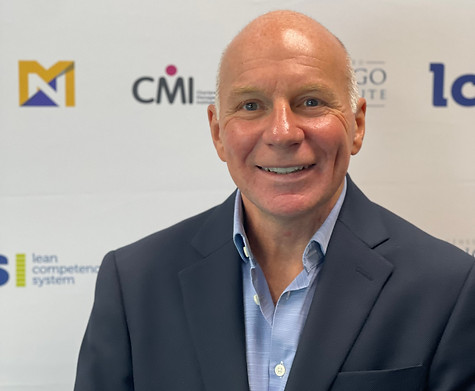
This glossary’s roots began in 2010 when I worked with Newsprinters Eurocentral Ltd. I noticed less emphasis on the practice and principles of Organisational Excellence in manufacturing and more on the language used to describe them.
Of course, people then became concerned about learning vast amounts of new words rather than paying attention to what they meant. Many terms also came about in the 1950s, and their original definitions weren’t applicable today. What we needed was a single reference point – a glossary. So, that’s what I created.
As I moved away from Newsprinters Eurocentral Ltd and worked with other businesses, I expanded the glossary to include all models and other tools and techniques. I was teaching courses in Continuous Improvement and realised manufacturing needed to be demystified; students were often overwhelmed with various acronyms.
Then, as manufacturing became about more than just improvement – and about leadership, management, and psychology too – the glossary grew once more. It now includes theories from the likes of Maslow, Herzberg, and McGregor, and even modern theorists such as Sinek. I’ve also included the GROW model to reflect manufacturing’s focus on developing people through coaching and mentoring.
Manufacturing is much more holistic today. And this glossary echoes that. Sitting at over 300 definitions, you’ll be able to find any term you need to achieve Organisational Excellence in the modern world.
Good luck on your journey.
George Donaldson
Term:
Lone Working
Lone Working is performed by individuals who work by themselves without close or direct supervision to complete a task.
Term:
Manufacturers Network
Manufacturers Network (MN) is a performance consultancy specialising in business growth. Its aim is to provide an in-depth approach to organisational change and performance.
Term:
Maslow (Abraham)
Abraham H. Maslow (1908–1970) was an American psychologist who focused on the field of humanistic psychology. He argued that people are aware of their own motivations in pursuit of self-understanding and self acceptance. It was this thinking that led him to developing, in 1943, his theory of human motivation and his hierarchy of human needs. This hierarchy, best illustrated as a pyramid, shows that to achieve the highest levels of human potential, we must ascend through all levels of the pyramid.
(See Maslow’s Hierarchy of Human Needs)
Term:
Maslow’s Hierarchy of Human Needs
Abraham Maslow’s Hierarchy of Human Needs looks at the needs of people, not just to establish efficiency but rather to understand what is required for us to be our best or achieve our full potential. Although this paper was written in 1943, it is probably more relevant today than it ever was, especially when you consider recent crises - work situations, global markets, mental health and social networking.
The hierarchy is drawn as a pyramid and is based on importance. It is suggested that you must fulfil one level at a time, so you can’t jump or skip levels.
LEVEL 1 is meeting our basic or physiological needs, or what I have called survival needs - what’s required to survive.
LEVEL 2 is about creating or providing a safe, secure and stable environment - physically and mentally.
LEVEL 3 is about belonging and being loved - if you do not belong or feel loved, you cannot reach the next level. In a work sense, this would be feeling valued.
LEVEL 4 is about self-esteem or feeling good about yourself. This can only happen when you feel that you are appreciated, you belong, you have value, and/or you are loved.
LEVEL 5 is the final stage and is self or mutual actualisation, or achieving the best you can be and helping others to be the best they can be. This can only be achieved once all other levels are fulfilled.
(See Maslow (Abraham) - Motivation - McGregor’s Theory X and Theory Y - Herzberg’s Two Factor Motivation Theory - Motivation)
Term:
McGregor (Douglas)
Douglas McGregor (1906–1964) was an American management professor in the field of personal development and motivational theory. He is best known for his development of theory X and theory Y, a leadership theory on two different leadership styles. The idea that a manager’s attitude has an impact on employee motivation was originally proposed by Douglas McGregor in 1957. In his 1960 book, The Human Side of Enterprise, McGregor proposed two theories by
which managers perceive and address employee motivation.
(See Maslow’s Hierarchy of Human Needs - McGregor’s Theory X and Theory Y - Herzberg’s Two Factor Motivation Theory - Motivation)
Term:
McGregor’s Theory X
and Theory Y
McGregor’s Theory X and Theory Y is based on his research, where he identified that managers fall into two categories based on their assumption of employees:
Theory X employees:
Work is inherently distasteful to most people and they will attempt to avoid work whenever possible.
Most people are not ambitious, have little desire for responsibility and prefer to be directed.
Most people have little aptitude for creativity in solving organisational problems.
Motivation occurs only at the physiological and security levels of Maslow’s hierarchy of needs.
Most people are self-centred - as a result, they must be closely controlled and often coerced to achieve organisational objectives.
Most people resist change.
Most people are gullible and unintelligent.
Theory Y employees:
Work can be as natural as play if the conditions are favourable.
People will be self-directed and creative to meet their work and organisational objectives if they are committed to them.
People will be committed to their quality and productivity objectives if rewards are in place that address higher needs, such as self-fulfilment.
The capacity for creativity spreads throughout organisations.
Most people can handle responsibility because creativity and ingenuity are common in the population.
Under these conditions, people will seek responsibility.
(See McGregor (Douglas) - Maslow’s Hierarchy of Human Needs - Herzberg’s Two Factor Human Motivation Factors - Motivation)
Term:
Mehrabian’s Communications Theory
From the 1960s, Albert Mehrabian pioneered the understanding of communications. His research established an understanding of body language and non verbal communications.
His theory identified:
Face to face communications
7% of meaning is in the words that are spoken.
38% of meaning is paralinguistic (the way that the words are said).
55% of meaning is in facial expressions.
Telecommunications
16% of meaning is in the words that are spoken.
84% of meaning is in tone.
(See Schulz von Thun’s Four Side Communications Theory - Shannon and Weaver’s Communications Theory)
Term:
Mentoring
Mentoring can be described as helping others to achieve what they want to be in the future. Mentoring is personal and relationship orientated. It is generally based on the long-term interactions between two people, primarily focused on long term development of the mentee. The mentor is generally in a higher position (not a direct manager) and can be considered a trusted advisor who has the knowledge, skills and experience in an area where the mentee wants to develop. The mentor will support them to become the person they want to be.
Term:
Mission
The business mission focuses primarily on the organisation’s purpose - the reason why it exists - with reference to its products, services, customers and markets.
(See Purpose - Strategy Deployment - Organisational Alignment)
Term:
Motivation
Motivation is the reason we do things and can be described as the emotional and social forces or factors that drive, initiate, guide and maintain goal orientated behaviours. It can be separated into two different types:
Intrinsic motivations are those forces or factors that come from within the individual. They are motivated to perform a behaviour or engage in an activity through personal gratification, or it feels good and they find it rewarding.
Extrinsic motivations are those forces or factors that come from outside the individual. They are motivated to perform a behaviour or engage in an activity to earn a reward or avoid a punishment.
(See Maslow’s Hierarchy of Human Needs - McGregor’s Theory X and Theory Y - Herzberg’s Two Factor Motivation Theory)
Term:
Muda
Muda is a Japanese word that translates to ‘waste’, or failure of people or processes to deliver a product or service effectively and efficiently (in general terms, it describes all waste).
(See 7 or 8 Wastes - TIMWOOD - 3M)
Term:
Mura
Mura is a Japanese word that translates to ‘unevenness’ and refers to uneven flow or distribution of activities (work), machines and processes, or failures related to unpredictable or inconsistent outputs. (See 3M)
Term:
Muri
Muri is a Japanese word that translates to ‘overburden’ and refers to stress on people and machines, or failures related to standardisation to create effective and efficient processes or services.
(See 3M)
Term:
Non-value Adding Activity
These are activities that do not directly add value to the product or service for the customer. However, these may be essential to the business. The goal is to reduce or eliminate all Non-value Adding Activities, ensuring what remains is effective and essential for the business.
Term:
Objectives
Business Objectives are short-term actions that can generally be achieved over one year and go towards achieving the business aims/goals.
(See Aims - Objectives - Purpose - Strategy Deployment - Organisational Alignment - Doran’s SMART Model)