

Manufacturing glossary of terms
Unlock the secrets of manufacturing with our glossary of terms developed over 40 years by George Donaldson, Shingo Prize recipient! Take a deep dive into industry jargon. Don't wait! Master your industry knowledge NOW!
The story of how this glossary was created and has evolved, in the words of author George Donaldson.
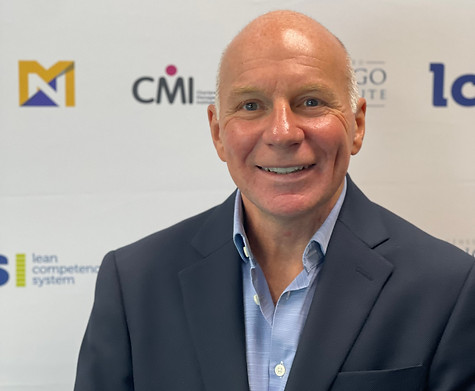
This glossary’s roots began in 2010 when I worked with Newsprinters Eurocentral Ltd. I noticed less emphasis on the practice and principles of Organisational Excellence in manufacturing and more on the language used to describe them.
Of course, people then became concerned about learning vast amounts of new words rather than paying attention to what they meant. Many terms also came about in the 1950s, and their original definitions weren’t applicable today. What we needed was a single reference point – a glossary. So, that’s what I created.
As I moved away from Newsprinters Eurocentral Ltd and worked with other businesses, I expanded the glossary to include all models and other tools and techniques. I was teaching courses in Continuous Improvement and realised manufacturing needed to be demystified; students were often overwhelmed with various acronyms.
Then, as manufacturing became about more than just improvement – and about leadership, management, and psychology too – the glossary grew once more. It now includes theories from the likes of Maslow, Herzberg, and McGregor, and even modern theorists such as Sinek. I’ve also included the GROW model to reflect manufacturing’s focus on developing people through coaching and mentoring.
Manufacturing is much more holistic today. And this glossary echoes that. Sitting at over 300 definitions, you’ll be able to find any term you need to achieve Organisational Excellence in the modern world.
Good luck on your journey.
George Donaldson
Term:
Coyle’s Culture Code High Performance Team Model
Daniel Coyle is an American author most notable for The Culture Code, the result of a four-year study, during which time, he visited and researched eight of the world’s most successful groups to discover that it is a specific set of skills that sets them apart from the rest: building safety, sharing vulnerability and establishing purpose.
Through his studies of how people work together, he argues that culture is the most important thing you do as a leader: “Creating great culture isn’t magic, it’s a leadership skill that you can learn”. It is achieved by three basic principles:
Build safety to make everyone feel comfortable in working together. Share vulnerability to show no-one needs to be perfect.
Establish purpose through a common goal and a clear path to get there.
He also suggests that co-creation is vital for high performance teams.
(See High Performance Teams Characteristics PERFORM - High Performance Teams Characteristics SUCCEEDS - Lencioni’s Five Dysfunctions of a High Performing Team)
Term:
Culture
Culture could be described as the accumulation of all the behaviours in an organisation.
(See Behaviours - Quinn’s Culture Types - The Cultural Web)
Term:
Current State
Current State is the state we are in now. Measurements such as records, documents, reports and visual evidence are used to describe this state as we need to know if we have made improvements.
Term:
Customer Demand
Customer Demand is the number, or quantity, of product that the customer requires, or is expected to purchase, during a period of time. (See Takt Time)
Term:
Cycle Time
Cycle Time is the time required to complete one cycle of an operation or to complete a function, task or job from start to finish.
Term:
DIKW Pyramid
The DIKW Pyramid illustrates how data is purely raw facts, numbers and letters and how only when we add context, do we create information. It also illustrates how when information is analysed and understood through patterns, rules or principles, it becomes knowledge. Wisdom comes last when we reflect on our experiences and evaluate our knowledge.
Term:
DMAIC
DMAIC is a problem-solving technique used in six Sigma and stands for:
Define.
Measure.
Analyse.
Improve.
Control.
At Manufacturers Network, we use PDCA as our DMAIC. It is more than just PDCA and the big difference is the amount of time and effort spent in measuring and analysing.
(See 6 Sigma - PDCA)
Term:
Deming (W. Edwards)
Dr William Edwards Deming (1900–1990) was the quality management pioneer, business consultant, and author who, in the 1950s, introduced his quality, continuous improvement and management methodologies to Japan, which subsequently transformed not only Japan but the western industrial world.
In the 1980s, Dr Deming worked with Ford Motor Company, helping to transform it from loss making to being the top of the big three motor companies.
Dr Deming also pioneered the PDCA methodology for continuous improvement and statistical process control. His management principles were later adopted by ISO standards and developed in what he called the theory of profound knowledge.
(See Deming’s 14 Management Principles, Deming Prize, 8 Principles of Quality Management - SPC - PDCA - CI - ISO)
Term:
Deming Prize
The Deming Prize was introduced by the Japanese Union of Scientists in 1951 to honour W. Edwards Deming. The prize is the longest running of its kind and is awarded to those organisations that can demonstrate major advances in quality. The prize also recognises individuals who have made major contributions to the advancement of quality.
(See Deming - Shingo Model - Baldrige National Quality Award - EFQM - Organisational Excellence)
Term:
Deming’s 14 Management Principles
In his book, Out of the Crisis, Deming identified 14 Management Principles, which were also the foundation for the ISO quality system principles that were introduced in 1987. They:
Create constancy of purpose towards improvement.
Adopt the new philosophy.
Cease dependence on inspection.
Move towards a single supplier for any one item.
Improve constantly and forever.
Institute training.
Institute leadership.
Drive out fear.
Break down barriers between departments.
Eliminate slogans.
Eliminate management by objectives.
Remove barriers to pride of workmanship.
Institute education and self-improvement.
The transformation is everyone’s job.
(See Fayol’s 14 Management Principles - Taylor’s Principles of Scientific Management)
Term:
Division of Labour
The Division of Labour was introduced, or popularised, by Adam Smith in 1776 in his book, The Wealth of Nations. The Division of Labour basically takes a large task/operation performed by one worker and breaks it down to sub-tasks/operations performed by multiple workers. Therefore, this labour becomes more efficient and productive and wastes less time. In his book, Smith describes the work of the manufacture of pins, where in a single process, one person can make barely one pin per day. When the task is broken down into 18 parts, the enterprise of 10 workers could produce 48,000 pins per day.
(See Smith (Adam) - Ford (Henry))
Term:
Doran’s SMART Model
George T. Doran, a consultant and former Director of Corporate Planning for Washington Water Power Company, published a paper titled There’s a S.M.A.R.T. Way to Write Management’s Goals and Objectives, in 1981. He recognised that companies need to achieve goals and objectives but that often, established goals were too diffused to have a meaningful impact. His model uses the acronym SMART, which means:
S = Specific: clearly define your objective. Make it as specific as possible (who, what, when, where, why).
M = Measurable: how will you monitor progress and measure success. (leading and lagging measures)?
A = Achievable: is your objective challenging and achievable? It should be agreed with both parties.
R = Realistic: be realistic about how long it will take to achieve your objectives. Focus on outcomes rather than the means of achieving them.
T = Time-bound: agree the date by which the outcome must be achieved.
(See Objectives)
Term:
Downtime
Downtime is the time when equipment/machines are not available for production, either through planned (maintenance) or unplanned events (breakdowns).
(See OEE)
Term:
Drucker (Peter)
Peter Drucker (aka the Father of Modern Day Management), 1909 2005, was a management consultant, educator, and author whose writings contributed to the philosophical and practical foundations of the modern business corporation. He invented the concept known as management by objectives and self-control. In 1959, he coined the term ‘knowledge worker’ and is one of the best-known and most widely influential thinkers and writers on the subject of management theory and practice.
Term:
EFQM
The European Foundation for Quality Management was established in 1988 and is a globally recognised framework that focuses on five key elements:
Leadership.
People.
Policy and strategy.
Partnerships and resources.
Processes.
(See Deming Prize - Shingo Model - Baldrige National Quality Award - Organisational Excellence)