

Manufacturing glossary of terms
Unlock the secrets of manufacturing with our glossary of terms developed over 40 years by George Donaldson, Shingo Prize recipient! Take a deep dive into industry jargon. Don't wait! Master your industry knowledge NOW!
The story of how this glossary was created and has evolved, in the words of author George Donaldson.
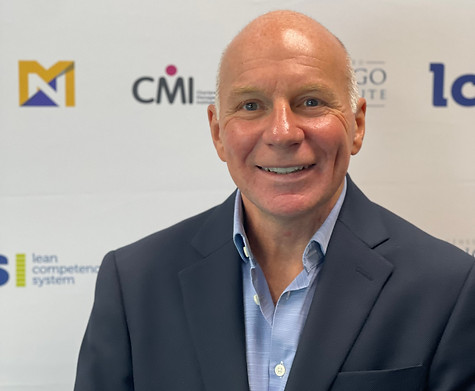
This glossary’s roots began in 2010 when I worked with Newsprinters Eurocentral Ltd. I noticed less emphasis on the practice and principles of Organisational Excellence in manufacturing and more on the language used to describe them.
Of course, people then became concerned about learning vast amounts of new words rather than paying attention to what they meant. Many terms also came about in the 1950s, and their original definitions weren’t applicable today. What we needed was a single reference point – a glossary. So, that’s what I created.
As I moved away from Newsprinters Eurocentral Ltd and worked with other businesses, I expanded the glossary to include all models and other tools and techniques. I was teaching courses in Continuous Improvement and realised manufacturing needed to be demystified; students were often overwhelmed with various acronyms.
Then, as manufacturing became about more than just improvement – and about leadership, management, and psychology too – the glossary grew once more. It now includes theories from the likes of Maslow, Herzberg, and McGregor, and even modern theorists such as Sinek. I’ve also included the GROW model to reflect manufacturing’s focus on developing people through coaching and mentoring.
Manufacturing is much more holistic today. And this glossary echoes that. Sitting at over 300 definitions, you’ll be able to find any term you need to achieve Organisational Excellence in the modern world.
Good luck on your journey.
George Donaldson
Term:
French and Raven’s Bases of Power
Based on their 1959 study, John French and Bertram Raven identified that power is divided into five separate and distinct forms. This was followed by Raven’s subsequent addition in 1965 of a sixth separate and distinct base of power.
Legitimate power: this is the leader’s power to get others to comply purely based on their position.
Reward power: this is a leader’s ability to yield power by compensating their employees for compliance.
Coercive power: a leader who draws on their employee’s compliance through force is said to have coercive power.
Informational power: a leader who has control over critical information that others need is said to possess informational power.
Referent power: referent power is a leader’s ability to lead with trust and by example.
Expert power: expert power relies on a leader’s specialised knowledge, domain expertise or skill-set.
Term:
Future State
Future State is the desired state of where we want to be and is used when mapping (VSM or process mapping).
(See Value Stream Mapping - Process Mapping)
Term:
Gayot’s RACI Model
Developed and introduced by Charles-Henri Orson Flavien Gayot in the 1950s, the RACI model clearly lays out roles and responsibilities for any activity or group of activities.
Responsible: who is responsible, or the person assigned to do the work?
Accountable: who is accountable, or the person who makes the final decision and has ultimate ownership?
Consulted: who is consulted, or the person(s) who must be consulted before a decision or action is taken?
Informed: who is informed, or the person(s) who must be informed that a decision or action has been taken?
Term:
Gemba
Gemba is a Japanese word that means going to the real place of work, or where the work is performed.
The Gemba process is based on three principles:
See where the actual work happens.
Ask why.
Show respect.
The Gemba mindset looks at:
Immediate problems.
Potential problems.
Improvement opportunities.
Term:
Gilbert and Whittleworth’s OSCAR Model
The OSCAR Model of Coaching was developed by Andrew Gilbert and Karen Whittleworth in 2002 and is widely recognised as an enhancement to the GROW coaching model.
Outcome: this is where we clarify what the individual or team wants to achieve.
Situation: create clarity around the current situation/state for the individual or team.
Choices/Consequences: this is where you help the team member or teams to identify and select at least three options/choices (just one is not a choice; two is a dilemma, and three you can now choose) and discuss possible consequences of each.
Action: help the team member or teams create a clear/smart action plan (they must be responsible for their action plan).
Review: this is an ongoing process of reviewing progress against an action plan - lessons learned.
Term:
Goals (Aims)
Business goals or aims are considered to be the long-term strategic goals that are set over 3–5 years and are deemed vital or critical in achieving the business vision.
(See Aims - Objectives - Purpose - Strategy Deployment -Organisational Alignment)
Term:
Goleman (Daniel)
Daniel Goleman is an internationally known psychologist, business consultant, and author. His 1995 book, Emotional Intelligence, was on The New York Times best-seller list for a year and a half. His Harvard business review, What Makes a Leader, is one of the most read papers of all time.
(See Goleman’s Emotional Intelligence Model)
Term:
Goleman’s Emotional Intelligence Model
Goleman describes emotional intelligence as the ability to understand and manage your own emotions and feelings, as well as those of others. His model has two main categories - understanding yourself and relationships with others - and identifies four elements that make up emotional intelligence.
Understanding yourself
Self-awareness: means that you understand how you feel and can accurately assess your own emotional state.
Self-management: builds on the understanding that you gained with self-awareness and involves controlling your emotions so that they don’t control you.
Relationships with others
Social awareness: involves expanding your awareness to include the emotions of those people around you.
Social skills/Relationship management: means using an awareness of your own emotions and those of others to build strong relationships. (See Goleman (Daniel))
Term:
Goleman’s Leadership Styles
Goleman is recognised as having written the most read Harvard business review, What makes a leader, and in his Primal Leadership book, he identified six different styles of leadership. He stated that each style has its place but some need to be limited. He argued that you can learn leadership and leadership styles and you can try to master some of them.
Visionary: leader rallies team, group, troops, employees behind a vision.
Coaching: leader helps develop people over the long term.
Affiliative: leader is focused on harmony and relationships.
Democratic: leader listens to everyone and builds consensus. Pacesetting: leader demands or expects excellence and results. Commanding: leader commands and controls - the louder they get, the righter they become - they expect immediate compliance.
(See Goleman (Daniel) - Goleman’s Emotional Intelligence Model)
Term:
Hansei
Hansei is a Japanese word that means self-reflections and when translated, we use the term ‘lessons learned’. This is a key continuous improvement technique/practice to reflect, look back, think or contemplate on what went well, what could be improved and what we learned.
(See Lessons Learned)
Term:
Hawthorne Experiments
The Hawthorne Experiments (1924–1932) were commissioned studies (a series of experiments) at the Western Electric Hawthorne Factory. The experiments were designed to improve productivity of the workforce (48,000). The outcome of this study suggests that a worker’s performance improved due to being observed or there being an increased attention/focus on the worker. This is now known as the Hawthorne effect, or observer effect.
Term:
Heijunka
Heijunka is a Japanese word that means production levelling, also known as production smoothing. It is a technique for reducing the Mura, which in turn, reduces Muda. It was vital to the development of production efficiency in the Toyota production system and Lean manufacturing.
(See Mura - Muda - 7 Wastes)
Term:
Hersey and Blanchard
Situational Leadership
The Hersey-Blanchard Situational Leadership Theory was introduced in 1969. It has two pillars: leadership style and the maturity level of those being led. To Hersey and Blanchard, these leadership styles stem from four basic behaviours, designated with a letter-number combination:
S-1: Directing - telling.
S-2: Coaching - selling.
S-3: Supporting - participating.
S-4: Delegating.
Four maturity levels of the group are posited by Hersey and Blanchard, with letter designations:
M-1: basic incompetence or unwillingness in doing the task.
M-2: inability to do the task but willing to do so.
M-3: competent to do the task but do not think they can.
M-4: the group is ready, willing and able to do the task.
According to Hersey, ability level and willingness to do work can be cultivated by a good leader by raising the level of expectations. Blanchard overlays four permutations of competency-commitment, again with a letter designation:
D1: low competence and low commitment.
D2: low competence and high commitment.
D3: high competence and low/variable commitment.
D4: high competence and high commitment.
(See Blanchard’s ABCD Trust Model)
Term:
Herzberg (Frederick)
Frederick Herzberg (1923–2000) was an American psychologist who became one of the most influential names in business management. He is most famous for introducing job enrichment and the two-factor theory, or the motivation hygiene theory. According to Herzberg, there are some job factors that result in satisfaction while there are other job factors that prevent dissatisfaction.
(See Herzberg’s Two-Factor Motivation Theory - McGregor’s Theory X and Theory Y - Maslow’s Hierarchy of Human Needs - Motivation)
Term:
Herzberg’s Two Factor Theory
According to Herzberg’s Two Factor Theory, also known as the motivation hygiene theory, two different factors govern job dissatisfaction (the opposite being not dissatisfied) - which is related to intrinsic motivational factors - and job dissatisfaction (the opposite being not dissatisfied) - which is related to extrinsic factors or what Herzberg called hygiene factors.
Hygiene factors (extrinsic motivators) include:
Pay: the pay or salary structure should be appropriate and reasonable. Company and administrative policies: the company policies should not be too rigid - they should be fair and clear.
Company benefits: the employees should be offered family health care plans, employee help programmes.
Physical working conditions: the working conditions should be safe, clean and hygienic. Status: the employees’ status within the organisation should be familiar and retained.
Interpersonal relations: the relationship of the employee with their peers, superiors and subordinates should be respectable.
Job security: the organisation must provide job security to the employees.
Motivation factors include:
Recognition: the employees should be recognised for their accomplishments by their managers and leaders.
Sense of achievement: the employees must have a sense of achievement.
Growth and promotional opportunities: there must be growth and advancement opportunities in an organisation to motivate the employees to perform well.
Responsibility: the employees must hold themselves responsible for the work - the managers should give them ownership of the work.
Meaningfulness of the work: the work itself should be meaningful, interesting and challenging for the employee to perform and be motivated by.
(See Herzberg (Frederick) - McGregor’s Theory X and Theory Y - Maslow’s Hierarchy of Human Needs - Motivation)